

We live in a world inundated with information. In almost any subject, there is far more to read than could ever be read, and new print and digital content is produced all the time. Given this reality, one must digest a vast quantity of scholarship to become an expert in a field. More importantly, however, the expert also needs a keen grasp of what is essential and what is not. Insight is the key to true knowledge, and it is often difficult to acquire.
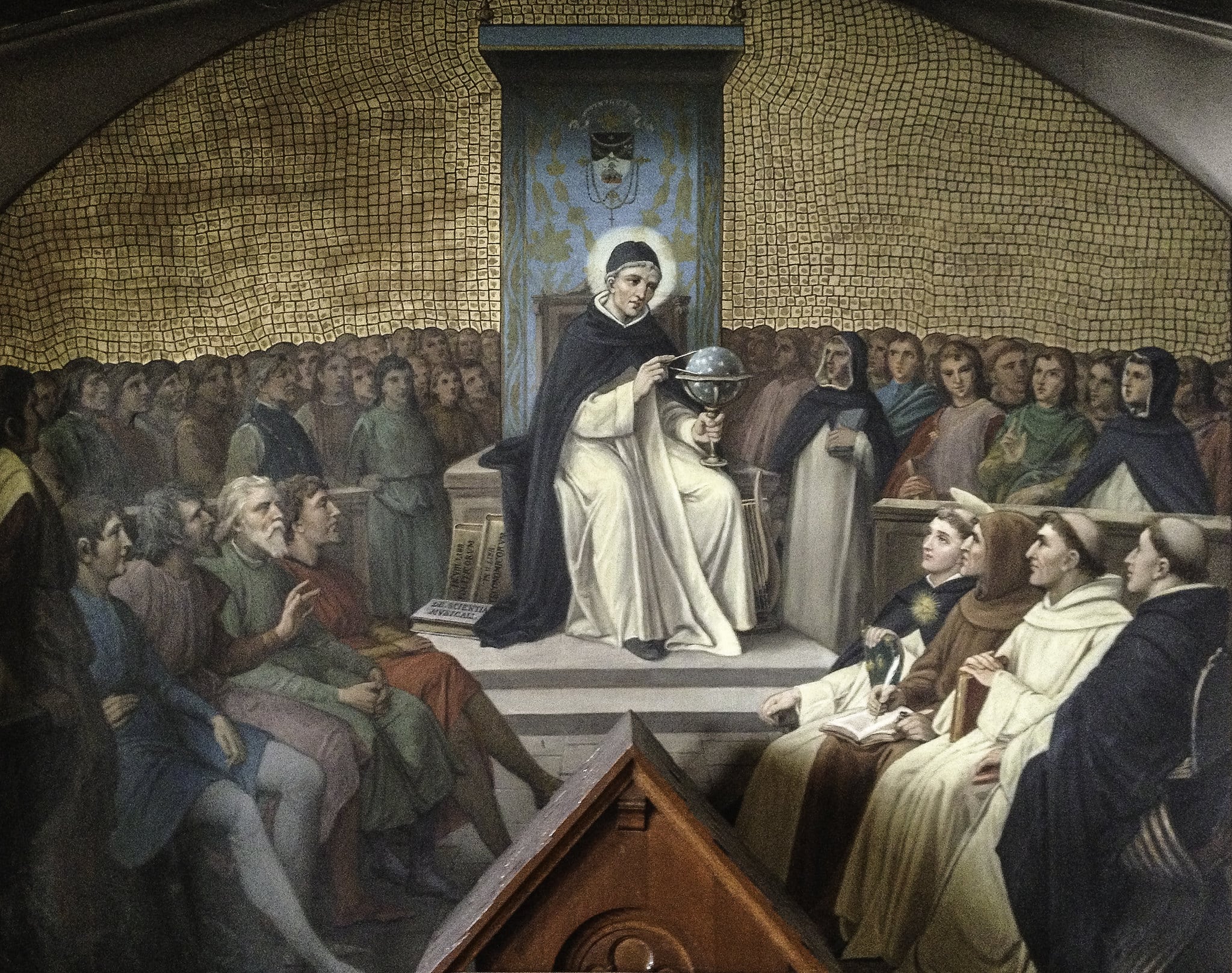
The scale of this information overload may be uniquely overwhelming today, but the problem itself is not new. In the twelfth and thirteenth centuries, for example, a flood of new Latin translations of ancient Greek and medieval Arabic authors entered the European intellectual scene. These writings, particularly many previously unavailable works of Aristotle, caused quite the stir in the medieval academy and led to controversies about their implications for the Christian faith. In order to enter these debates, the Dominican students of the studium generale of Cologne pestered their new master, Albert of Lauingen, to help them understand these new sources of information.
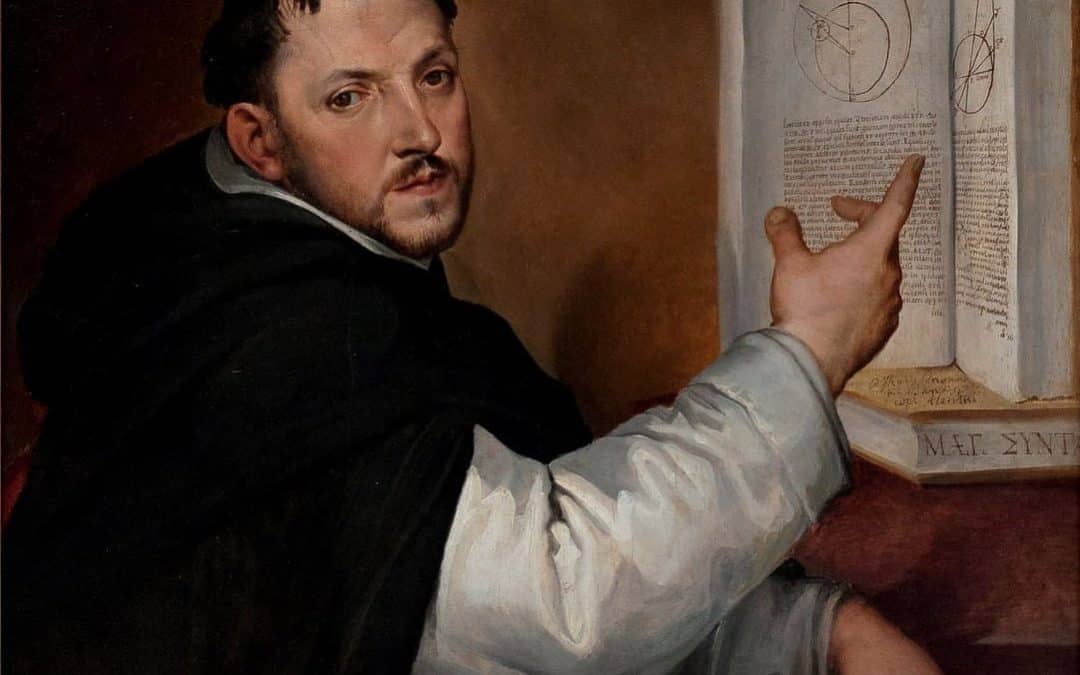
In response, Albert wrote a vast corpus of literature that transformed the theological, philosophical, and scientific discourse of the High Middle Ages. He commented on every work of Aristotle and pseudo-Dionysius available to him in Latin, bringing together two major philosophical schools of the ancient world—the Peripatetic and Neoplatonic—in a synthetic way (Twetten and Baldner 2013, 166–168). Along with his commentary on the Sentences of Peter Lombard, this philosophical work formed the background for more than a dozen Scriptural commentaries, major treatises on the Blessed Virgin Mary and the sacraments, and Albert’s own Summa Theologiae. Many of these works arose from teaching his Dominican brothers, among whom his most famous student was St. Thomas Aquinas.
Beyond his works in theology, logic, metaphysics, ethics, and political philosophy, Albert also analyzed Aristotle’s works of natural philosophy, covering topics in what we would now call zoology, botany, physics, astronomy, geology, meteorology, medicine, and more. In these commentaries, he carefully explained Aristotle’s thought for his students and supplemented it heavily with his own observations and corrections. While his methods did not involve repeated and controlled experimentation in the manner of modern science (cf. Resnick and Kitchel 2022, 130–134), his insistence upon testing received knowledge about the physical world by personal experience made him the pre-eminent naturalist of his day and paved the way for a more rigorous approach to the study of nature in the late medieval and early modern period.
Albert’s treatment was so thorough that he noticed that there seemed to be books missing in his copy of the works of Aristotle, texts that Aristotle mentioned to which Albert did not have access. He proceeded to write his own books to fill these gaps. In at least one case, his On the Movements of Animals, Albert later discovered a Latin translation of the missing work which he had predicted to exist: Aristotle’s own similarly titled On the Movement of Animals (Resnick and Kitchell 2022, 68–69). Upon discovering this text, Albert proceeded to write a commentary on it as well! Given his comprehensive and insightful scholarship in so many disciplines, it is no surprise that he came to be known as Albert the Great in his own lifetime and was given the title Doctor Universalis upon his canonization in 1931.
Among the lessons that St. Albert teaches us by his life and work, one of the greatest is to delight in seeking the truth wherever it might be found. He confidently engaged pagan, Jewish, and Muslim sources and demonstrated that many of their insights into philosophy and natural science were harmonious with the Christian faith. Likewise, he intrepidly explored both the heights of theology and the simplest of created things. We see his fundamental excitement for knowing the truth in his minute observations of the natures of hawks, flowers, and rocks and his systematic treatment of the nature of God alike.
We are the kind of creatures who desire to know, as Aristotle observes at the beginning of his Metaphysics, but we are not merely that. As St. Albert knew well, we are creatures made for beatitude, made for delighting forever in the overwhelming intelligibility and love of God. All of St. Albert’s studies aimed at this end, as did every aspect of his life. Today, St. Albert is perhaps best known not for his own scholarship but for teaching St. Thomas Aquinas, who eclipsed his master as a philosopher and theologian. Similarly, St. Albert’s scientific studies are significant in the history of natural science, but they too have been surpassed in most ways. What will never become outdated about St. Albert, however, is the witness of his personal sanctity lived out in his search for the truth and his service to the Church.
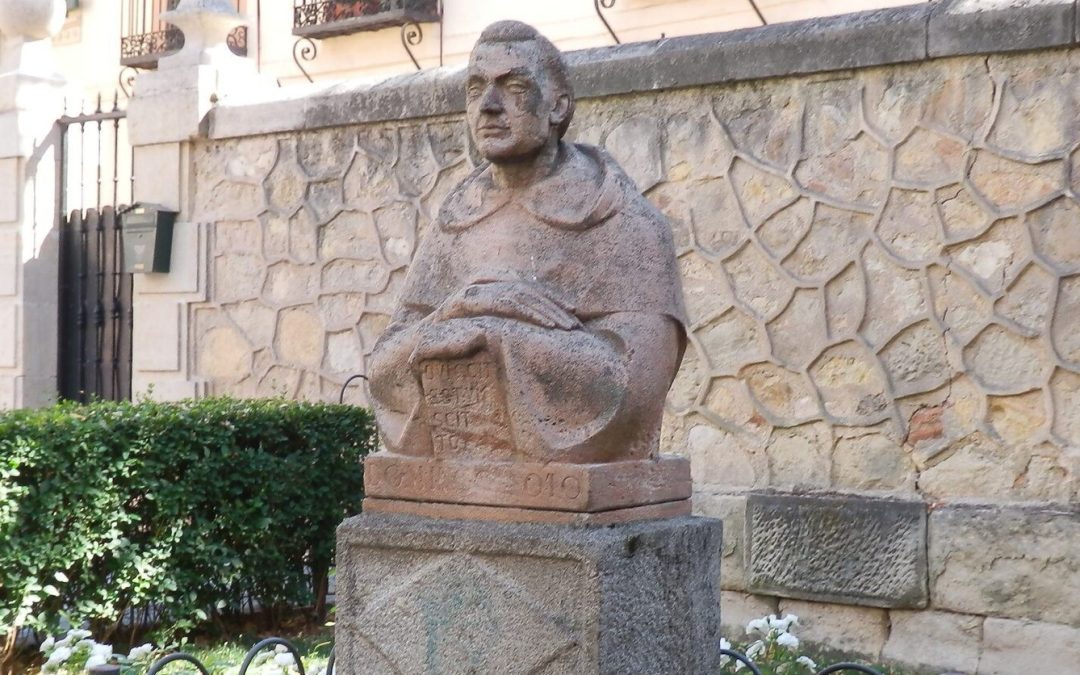
Whatever our area of study then, we might learn from St. Albert the Great to seek whatever is true. We might learn to cultivate breadth and depth in our studies, but insight above all. Indeed, we might learn to desire knowledge and clarity, but holiness above all. Today on his feast day, we invoke St. Albert’s prayers for us both as the patron saint of natural scientists and philosophers and as the Universal Doctor, asking that we too might delight in knowing the wonders of creation so as to rejoice with him forever in the presence of God.
✠
Photo by Fr. Lawrence Lew, O.P.
Bibliography:
Resnick, Irven M., and Kenneth F. Kitchell Jr. 2022. Albertus Magnus and the World of Nature. First edition. Reaktion Books. https://press.uchicago.edu/ucp/books/book/distributed/A/bo157942569.
Twetten, David, and Steven Baldner. 2013. “Introduction to Albert’s Philosophical Work.” In A Companion to Albert the Great, edited by Irven M. Resnick. Brill. https://brill.com/display/title/14180.