

It’s been a busy few months, and you’ve finally got a free weekend to do whatever you want. How will you spend it? Maybe watch some Netflix? Play a round of golf? Go hiking? Head to the beach?
For Fr. Joseph Galien, O.P., it was a no-brainer: “I’m going to figure out how hailstones form up in the clouds, and maybe I’ll even toy around with how to build an airship.” Even for a Dominican, that’s unique.
When you look at the little bit we know about Joseph Galien, he seems like a normal friar at first. Born in 1699, he entered the Dominican priory at Le Puy, France, while still a youth. By the age of 27, he was an ordained priest already teaching philosophy at Bordeaux because of his intellectual gifts. In 1745, the year he received the chair of theology at the University of Avignon, he finished (what seems to be) the first of his published works: Theological letters treating the state of pure nature, the distinction between the natural and supernatural, and other matters which are consequent thereto. As I said, he seems a pretty normal Dominican.
In 1747, Galien received the chair of philosophy at the same university. This was nothing out of the ordinary for a Dominican or for Galien—after all, philosophy was the first subject he ever taught. But in that same year, a new side of Galien comes to light with his publication of a very particular philosophical work entitled A physical explication of the effects of electricity. The cleric who, for 25 or 30 years, has seemingly been studying nature and grace now writes a work dedicated to the reconciliation of natural philosophy and recent discoveries in electricity. Now that’s different.
Still, Galien’s work on electricity is bland compared to his later research. Eight years later, he published a text that he subtitled A physical and geometric amusement. For Galien, this research was something enjoyable, an intellectual exploration. The full title is A report concerning the nature and formation of hail and other related meteors, with a further consequence of the possibility of navigating through the air at the height of the region of hail. In this 100-page publication, Galien first presents a new theory about the formation of hail, in dialogue with the findings of other early modern scientists, including Descartes. Then, based on his claims about the atmosphere in the first part, Galien considers the possibility of air travel, never before accomplished at this point. He describes the manner of building an airship capable of carrying an entire army, considering its method of flight, its materials, and—most strikingly—its size: over a mile in every direction. Oddly enough, Galien then spends several pages comparing the size and carrying capacity of the airship to that of Noah’s ark. (The airship is several times larger.)
This latter portion of the work has sometimes been subjected to criticism and mockery by later writers because of its fantastical proposals. They take Galien as just another absurd scientist of a bygone age. But funnily enough, by ridiculing Galien, these authors show that they didn’t understand what he was really doing. They didn’t even read the book’s avertissement. Galien writes in the foreword: “I do not think that this [writing on air travel] exposes any person to the expense and the dangers of such navigation. It is only a question here of a simple theory about the possibility, and I only propose this theory by way of physical and geometric recreation.” Galien knew that his plans were unrealistic. They were unrealistic because they weren’t plans at all. They were just “recreation.”
In short, Galien wrote this work (and perhaps the one on electricity, too) for fun. He enjoyed doing research of this sort, and he liked to play around with funny ideas, like airships larger than Noah’s ark. And despite the impracticality of Galien’s proposals and the fact that he held somewhat faulty ideas about atmospheric pressure, it’s striking that the Montgolfier brothers achieved the very first human air travel in Galien’s city, Avignon, only thirty years after his work on hail and airships.
We don’t know much about the end of Galien’s life. Some sources say he lived only five more years; others say he lived another twenty-five. Still, one thing is clear: this Dominican friar simply loved learning. Father Joseph Galien wondered about the world, and he enjoyed looking at the world to find the answers. Whether it was nature and grace, electricity and hail, airships and arks, Galien approached the world energetically and jovially, like an inquisitive child. Living as we do in an age that often seeks knowledge only for its usefulness, we can take a page from Galien’s book. In the final analysis, the most important thing about knowledge isn’t its usefulness. It’s that knowledge is good and enjoyable in itself. And perhaps this is where Fr. Galien shows himself an excellent Dominican. He remembered that our final destiny, heaven, isn’t about using our knowledge; it’s about delighting in one long, joyful look at Truth himself.
✠
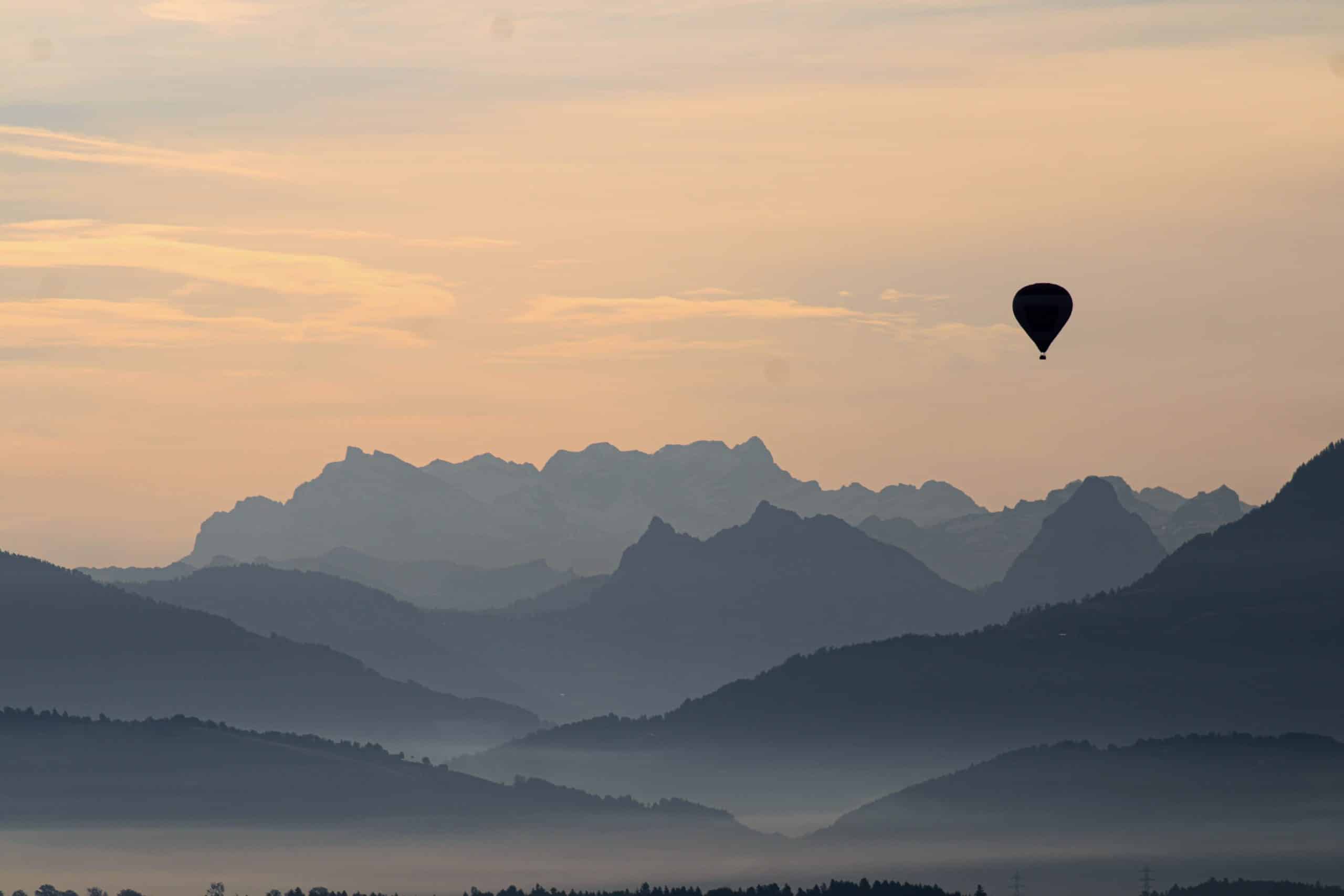
Photo by TBeissel on Pixabay
All bibliographical information is taken from Balthasar Wilhelm, “Joseph Galien,” in The Catholic Encyclopedia (1909).