

Philosophers begin by asking “why.” And in the lives of many, that’s where the problems begin. My mom always told me my questions would get me killed. In her mind’s eye, she saw me getting life-saving advice: “Quickly, jump!” or “Hold this rope—tight!” In whatever Clancy-esque future she envisioned for me, she knew I’d never shut up and listen—I’d have to ask “why.” Well, despite my obstinance, I survived childhood, and I learned soon enough that I could turn incessant questioning into a semi-respectable career by studying philosophy.
Wonder propels the philosopher through life. Yet faced with the grandeur and oddities of the world, he needs unyielding focus. Plato’s academy, the model of philosophical formation, implied a way of life to remain recollected and treat questions honestly. To constantly step away from the world, even to appreciate it more deeply. But philosophical searching, when done well, must eventually take another step. To live up to its name, φιλο-σοφια—the love of wisdom—demands more than an academic interest.
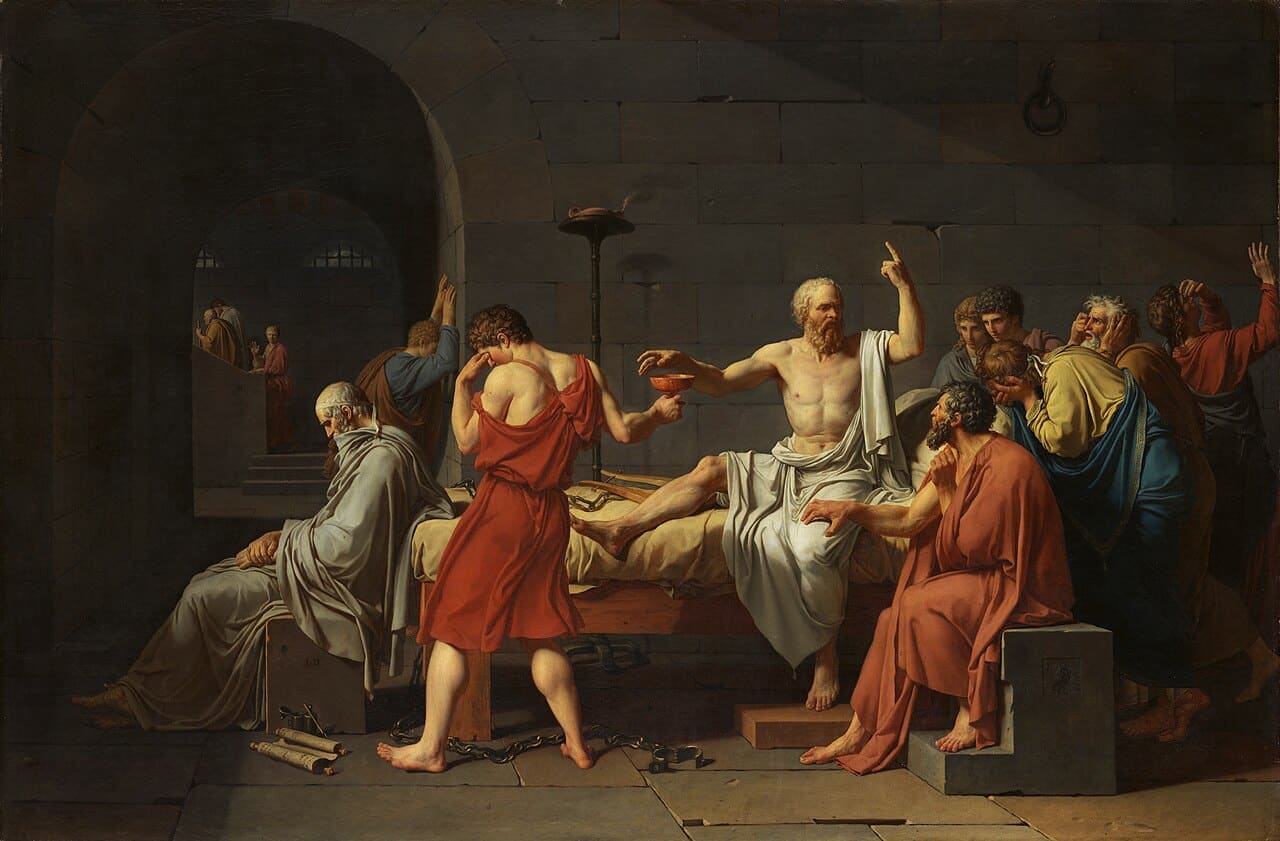
Plato’s students lived in the shadow of Socrates and his example, who knew that “philosophy is a preparation for death” (see Phaedo, 64a). In his final moments, Socrates offered a reflection on death and what might lie beyond the grave. He instilled in his students a hope based on reasoned arguments as well as his assurance that a life lived in pursuit of truth had trained their minds upon what mattered most. There was, therefore, nothing to be feared in death.
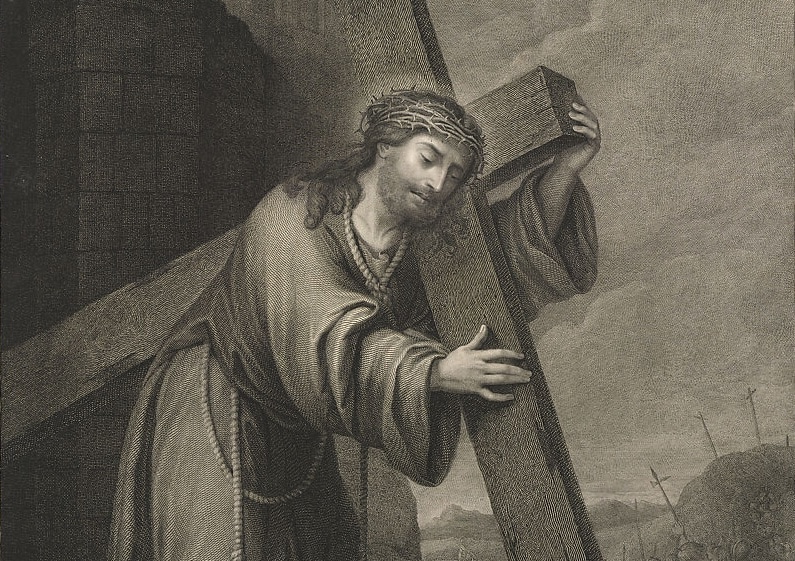
There were some students who took this to heart, who not only lived philosophically but died philosophically. But far from a mere lack of fear, they were inspired by love of an eternal wisdom. Saints Justin Martyr, Catherine of Alexandria, Boethius, Thomas More, Edith Stein. All five are members of an academy that spans nearly 1,900 years, who laid down their lives not for an idea, but for Jesus Christ. They not only listened to his every word but strained to live like him. As martyrs they answered the call to endure the cross with Christ. And from Jesus Christ as a first principle, they demonstrated the meaning of love.
Love is a preference. Love proves our preferences by what we’re willing to give up for it, and the martyr prefers the beloved to everything he has. Saint Thomas More, an accomplished humanist and statesman, was second only to the king in the governance of England when he made a most critical error. From his vantage in governance, he had the power and the king’s good graces to promote the ideals of state. Instead, Thomas preferred to lose everything, not in hatred of life or governance, but for God’s truth.
By refuting King Henry’s right to a divorce, Thomas More was brought to trial by a close friend. Immortal are More’s final words, by which he sealed a martyr’s fate and proved a most perfect love. Read closely: “I die the king’s servant, and God’s first.” Who did he love? Both. But who did he prefer? He was put to death, not for hatred of Henry, but out of love for the God of truth. And it was only in an authentic love of God that he could claim to be a true friend of the king. A lover of eternal wisdom does not hate anything true or good. But he will eventually be forced to make a choice, and will prefer the truth—whatever the cost.
Love is a choice. We tend to think of love as something that happens to us. It takes us by surprise with the irresistibility of pie on a windowsill. But the best loves are things we choose. Once the preference is clear, a loving heart makes a decisive choice. That choice requires that we be honest with ourselves. What do I really need? Would I live differently for it? Saint Teresa Benedicta of the Cross (Edith Stein) was a lover of souls whose honesty drew her from the realm of the speculative to a total consecration to the heart of Jesus as a Carmelite nun. Her philosophy drew her to a life of contemplating not only creatures but their Creator.
Despite her colleagues’ protests, Stein turned her back on academia for true love of wisdom. It was there, at the height of mystical union with the one she loved, that the darkness of the world found her. The Nazis imprisoned her in a concentration camp in response to the bishops’ criticisms of the Reich’s treatment of Jews. There Sister Teresa Benedicta of the Cross lived up to her name and was “blessed by the cross.” No one can force a martyr; she must choose to lay down her lifethrough “daily and hourly crucifying your self-will and self-love.” The choice of love binds oneself inseparably to the beloved. Sister Teresa Benedicta was bound in life by a love of wisdom, and in death looked upon the cross.
Love is a death. In the life of every lover, there will come a death. To love is to declare what your life is about, and thereby leaves you exceedingly vulnerable. And yet we know love is worth it. “Love is stern as death,” unyielding, relentless, and inescapable (Song 8:6). The martyr-philosopher, who has trained his sights on the truth, knows when to admit his error, but also when to hold fast. The eternal truths, the bedrock foundation, make a claim on life far greater than any critic.
Consider the martyr Boethius. Caught in the political snares of the heretical king Theoderic, Boethius was sentenced to death. In days he went from the halls of the Roman senate to a royal prison. Stripped of all he’d worked for, he turned in love to Lady Wisdom for consolation. Theoderic, who denied the divinity of Christ, could not sever Boethius from the truths of God manifest in his Son. For the martyr, love for life does not deter him from death (Rev 12:11). It casts aside every fear, not by hating life but by loving life’s Author.
These lovers of wisdom did not die for natural wonder or in the defense of ideals. They died for love. Love of Jesus Christ—the Word and source of wisdom. And when faced with a choice, when forced to prove a preference, their deaths reveal a perfect love. Although their lives began in wonder at the regularities and profundities of nature, their lives ended like their Creator and Savior. When love called them they travelled joyfully from Athens to Jerusalem, there to join Christ on the cross. They saw God’s effects, written into the world, and now they gaze upon the Cause, the Word they heard long ago.
The martyr-philosophers are models for every Christian. Every follower of Christ is called to a life of personal communion with Wisdom, to the renewal of their minds (Rom 12:2). The Dominican student brothers, inspired by their example, have put together this year’s Dominicana Journal: Wisdom (How to Love It and How to Live It). We hope that it will be a companion for you in the path towards love of Eternal Wisdom.
✠
Image: Jacques-Louis David, The Death of Socrates