

It’s hard to pin down exactly what Dominican spirituality is. But we can get a profound insight by one wild story about an early Dominican, Saint Raymond of Peñafort.
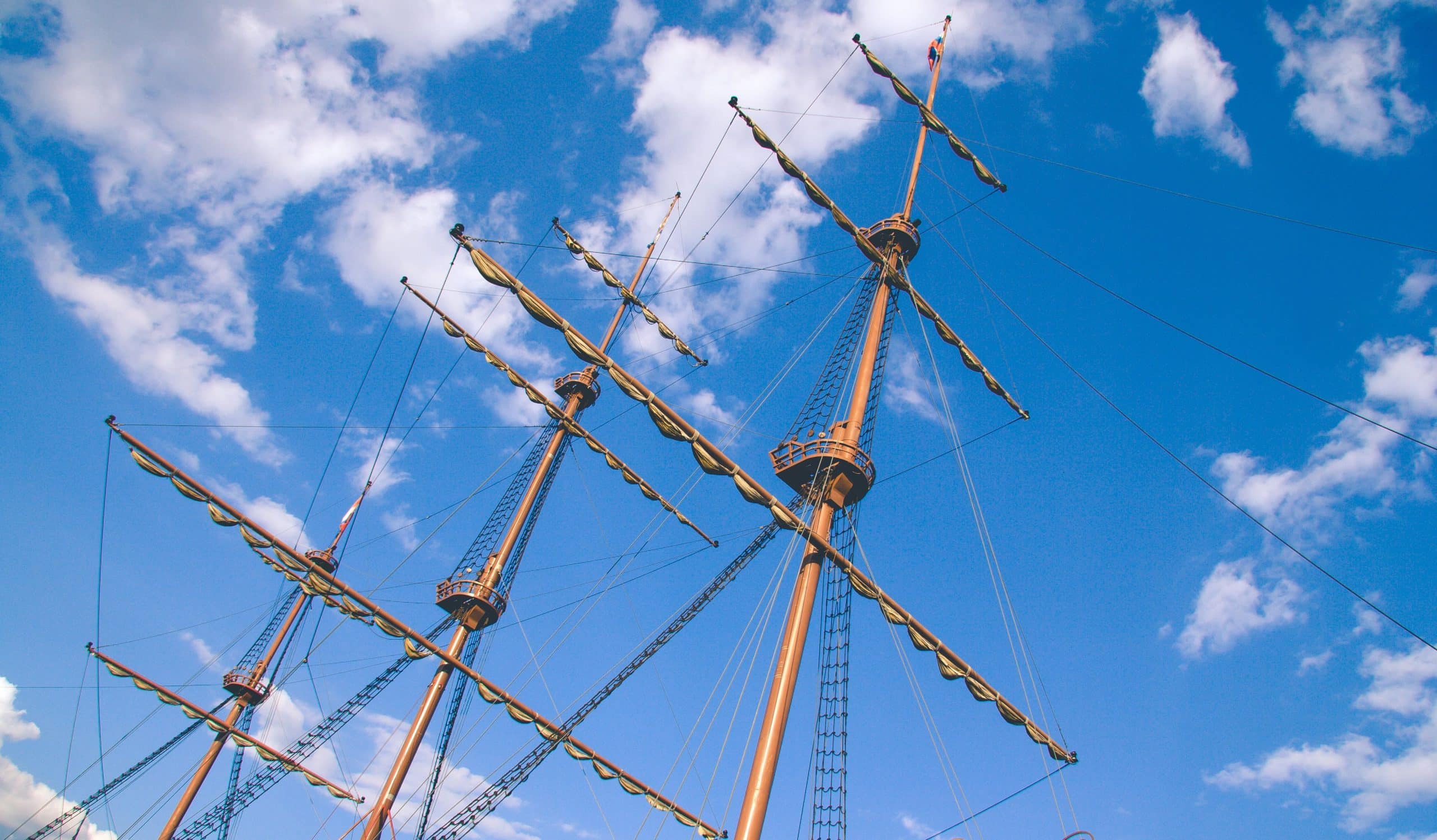
After Raymond had vehemently rebuked the King of Aragon for keeping a mistress, the king held him captive on the island of Mallorca, forbidding any ship to allow him to leave. Raymond then strolled down to the beach and took off his cappa—the black cape worn by the friars. He stood on the edge of his cappa and propped up the other side of it with his walking staff, fashioning a kind of sail. He then sailed off the island on his cappa, escaping the power of the king. We have, in this story, one aspect of Dominican spirituality in a nutshell. But let’s crack open this nutshell.
Those who stand up for the truth of the Gospel will find themselves in difficult situations, surrounded on all sides by enemies visible and invisible, external and internal. Indeed, scripture commonly uses the sea as a symbol of chaos and evil: “The waves of death encompassed me, the torrents of perdition assailed me” (2 Sam 22:5). The Dominican solution does not involve furtively sneaking into a ship to escape. Nor does it involve a passive or fatalistic resignation. The Dominican solution is a bold, resourceful, and magnanimous confidence in God, not restricted by worldly means or parameters. Not even content to walk across the water, we sail across it with speed and determination.
The key is that for the sons and daughters of St. Dominic our cappa is the only way to cross the treacherous sea.
The Holy Spirit alone impels and directs the Dominican soul. And it is precisely the cappa that serves as the means by which the Spirit moves us. More than merely a piece of clothing, the cappa is a symbol of obedience and penance.
In imitation of Christ, obedience gives us the radical freedom to make a complete gift of ourselves to others—a self-gift so complete that it includes our very will. Obedience prepares us to be receptive to the direction of another (hint, hint: the Holy Spirit), without a disordered self-love getting in the way. And when we have completely poured ourselves out in love, then we can be filled by God. In the end, we can either be pridefully full of ourselves or humbly full of God. Obedience gives us the humility to be completely and exclusively full of God and His divine power.
Penance is the complete acceptance of Divine Mercy. It is the result of an honest assessment of ourselves, of our failings, and of our absolute dependence on God. Ignoring the weight of our sins and failings causes us to sink beneath the waves of guilt, consciously or subconsciously. True acceptance of mercy is not only in the heart; it is also lived out by the actions of our life. Penance is the shape of a life converted to Christ, characterized by repentance for one’s sins and joy in God’s forgiveness. Then the weight is lifted and we can walk—even sail—on the waves!
Obedience and penance are two aspects that mark Dominican spirituality. And with the cappa of obedience and penance, there is no sea too deep or too vast to cross.
✠
Photo by Margerretta on Pexels