

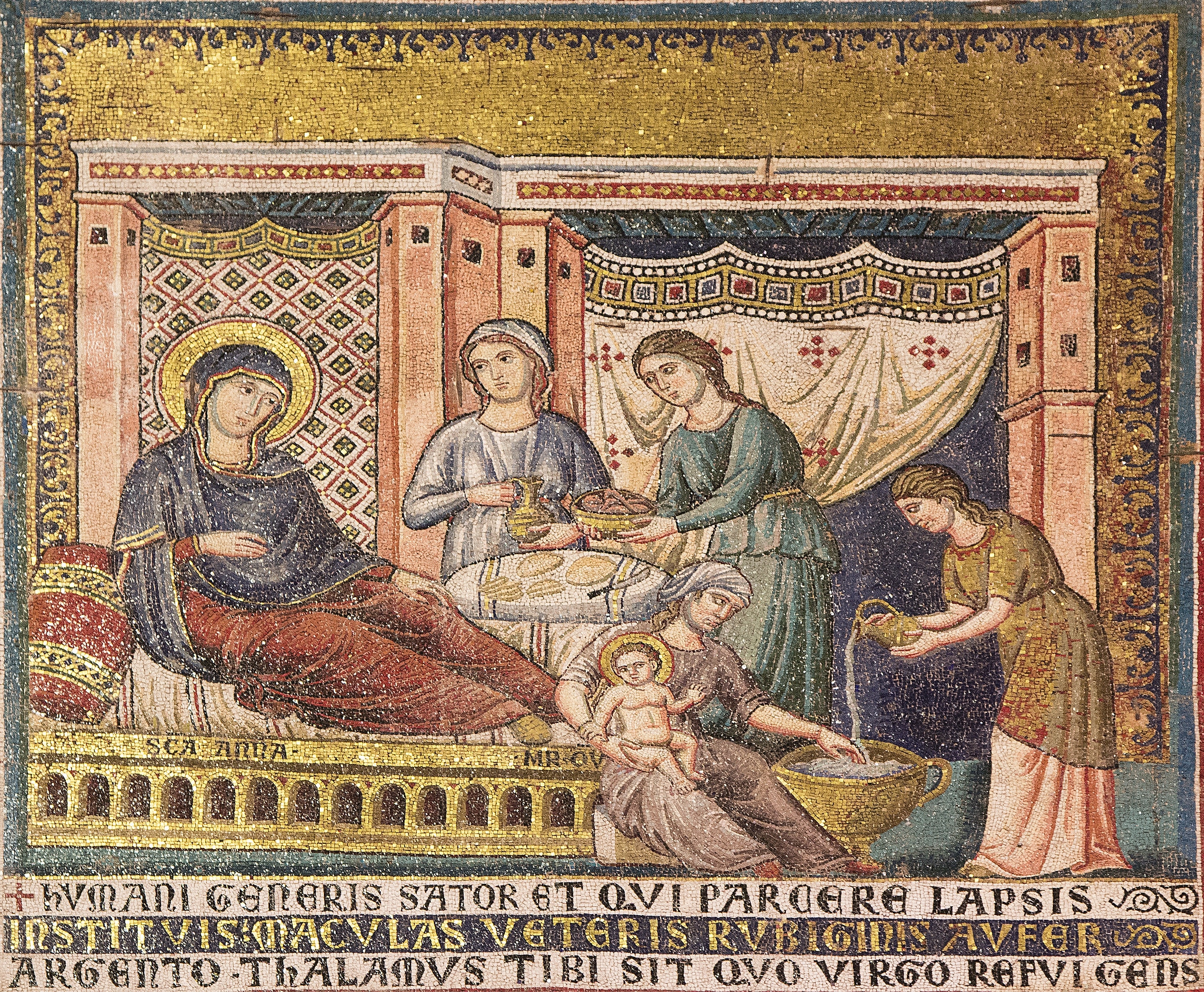
God, in his wisdom, often defies our expectations. The surprise helps to manifest his glory and power. He puts down the mighty from their thrones, and lifts up the lowly (see Luke 1:52). He says that the meek, the mourning, and mistreated are those who are truly blessed (see Matt 5:3–12). He was mighty as a tiny baby, majestic while riding a donkey, and victorious when hanging on a cross. With Saint Paul we can ask, “Has not God made foolish the wisdom of the world?” (1 Cor 1:20). God’s plans are not our plans.
Today, September 8th, is the Feast of the Nativity of the Blessed Virgin Mary. It’s the birthday of the Heavenly Queen. There’s a party tonight—and as the ways of God are different from ours, so too this party is different from ours. I’d like to limit the comparison to three key things.
First, the party is no surprise. Think of the standard, earthly surprise party: with secret plans and dimmed decorations, a group of friends and family hides out while the unsuspecting honoree enters. Surprise! The heavenly party, on the other hand, is completely flipped. Instead of an unsuspecting Mary coming to us, we hope to go to her. In her Assumption, Mary was taken up to sit in heavenly splendor. She is a sign to us that the saving power of God is effective. Instead of us welcoming her to the party—she will welcome us to life with her Son in heaven.
Second, we skip the corny song. While the song Happy Birthday to You does express well-wishes (we call the person “dear”), it doesn’t compare to the song we sing at Mary’s birthday party. Think of the typical setup: the person sits down, and everyone—not always in perfect harmony—sings at the person. How does this go down in heaven? Well, Mary is already singing—she sings her praises to God by leading her own song: the Magnificat. “He who is mighty has done great things for me, and holy is his name” (Luke 1:49). She sings with true humility. More than a denial of God’s blessing, Mary recognizes the good things God has done for her, and renders all praise back to God. When her birthday party begins, we join in. “And they sing a new song before the throne” (Rev 14:3).
Third, what about the gifts? What do you give the person who has it all? (“All” here refers to the immediate vision of God in perfect blessedness forever.) Even if we did come up with a good gift, our possessions don’t make it through heavenly customs. A bottle of wine or heated socks wouldn’t even be that glorious in heaven anyways. So, here we see again a reversal. Instead of us giving Mary gifts, Mary gives us grace—praying to her Son on our behalf. While on earth she gives us the gifts of heavenly help and motherly consolation. And, in the end, she’ll lead us to the greatest gift of all. As the Salve Regina says so beautifully, “after this our exile, show unto us the blessed fruit of thy womb, Jesus.” Compared to his glory, every gift pales.
So, for Mary’s birthday, we can’t expect a typical party. Still, we wish her all the best (the bonum universale—God), and thank God for the manifold graces he bestowed on his mother. We celebrate her birthday best by the worship of her divine Son. Mary wouldn’t have it any other way.
✠
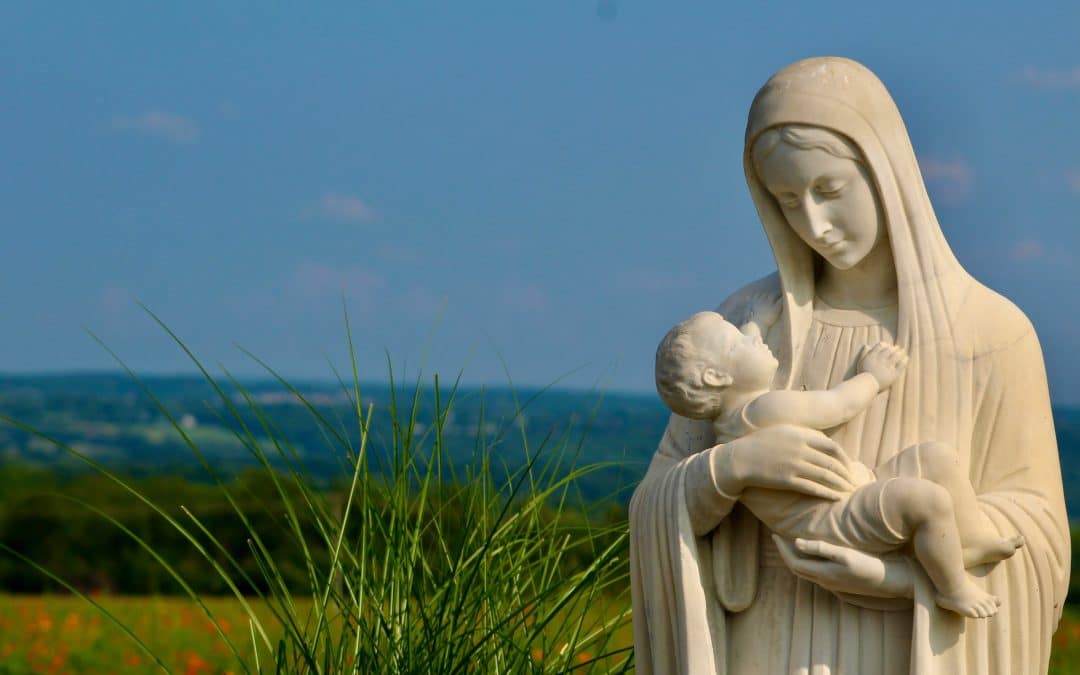
Photo by Fr. Lawrence Lew, O.P. (used with permission)